Showing posts with label Chicago Tuesdays. Show all posts

Monday, January 23, 2012

Hand-Maiden to the Fascists?

Chicago "L" Train

The Chicago Tribune reported about a multi-million dollar oopsie on Chicago's public transit system that is pulling needed and promised cars from the "L":

"This is not a public process that we are going to air in public," CTA spokeswoman Molly Sullivan said last week in response to repeated questions to repeated questions from the Tribune about the production setback.
The $1.14 billion CTA order for 706 Bombadier cars is taxpayer-funded.

Brilliant piece of editing, CT.

Now, maybe we can set those same journalistic instincts on the mayor's office when they decide to criminalize protests, or bash teachers and librarians. Or privatize schools. Or force teachers to work an extra two hours a day for less money than they were promised to make before the extra hours were tagged on. And then call them lazy and incompetent for refusing to take his crap. Or force libraries to close on Mondays because he can't "find" three million dollars - but he can find patrons to pony up $80 million to fund extra "police" protection during the WTO meetings.

And he can dispatch spokespeople to tell us why we don't need to know information about our transit system and the workings of our tax moneys, and he can hold press conferences to bully teachers and principals into accepting his moral obligations, and he can stock the local news with his staff to inform us why protesters are really evil professional anarchists bent on destroying our way of life for no other purpose than being evil...

And, for the most, our media watchdogs lap it up.

When I was watching the WMAQ news propaganda post with some spokesperson from his administration, nobody questioned the assertions that most of the aldermen trusted the wise and noble Emanuel - who, unlike the rest of these hicks, spent time in the Big City of Warshington and Knows How the Real World Operates (T) - to curtail our freedom and speech and assemblage for Our Own Good (C). The Sun-Times practically labeled him a hero on the front page of its Saturday paper ("Rahm Reinstitutes Mondays at the Libraries!") and waited until the last paragraph to give any word to the opposition. And story after story after story repeats the bold-faced lie that union teachers are lazy, that it's their fault that economically deprived schools continue to "fail" (by the chosen rubrics), and that privatized charter schools (mostly for-profit schools run with public money that can choose who can enroll and can kick poor-performing students out, which regular public schools can not do) are automatically better-performing than public schools - even though tests by their own rubrics show repeatedly that that's not true.

But finally, finally, we can point to one peace of evidence to say that the entire local media is not in the fascists' pockets.

We got a lot more to keep pushing for, though.

Let's Activate!

Tuesday, November 08, 2011

First Corporatopolis

Salon writer David Sirota understands about Chicago what few Chicagoans understand about our city and leadership.

But today, while cities may still largely vote Democratic, they are increasingly embracing the economics of corporatism. The result is that urban areas are a driving force behind the widening intra-party rift between the corporatist, pro-privatization Wall Street Democrats and the traditional labor-progressive “Democratic Wing of the Democratic Party.”

Start with a look at Chicago, the metropolis most identifiably (and inaccurately) branded as a hotbed of labor power and liberal economics.

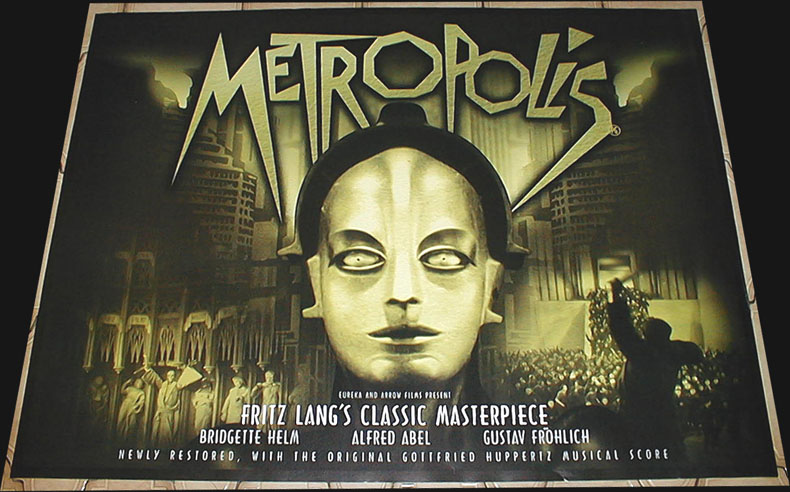
Fritz Lang would be scared.
In recent years, the Windy City has become “the most aggressive city in the United States in the privatization of public infrastructure,” according to the Public Interest Research Group. Citing the city’s budget crisis, officials have sold off highways and parking meters at cut-rate prices —all to pad the profits of corporate investors (the schemes are now being explored by other Democratic cities including Pittsburgh and Los Angeles). Despite this, during its once-in-a-generation contested mayoral election in 2010, the city’s voters chose investment banker Rahm Emanuel over other far more economically progressive candidates, and Emanuel quickly filled his administration with corporate consultants eager to accelerate the privatization already under way. Now, Emanuel has declared war on organized labor, with the Associated Press’s headline blaring “Even in Chicago, Mayor Goes After Labor Unions.”

The article isn't just about Chicago's habit of seeling off its public assets for the benefit of the few and the rich (who in turn scratch the itchy backs of thepols pushing such legislation) but also the trends and goings-ons in other quickly privatizing metros - including NYC, Denver, and Washington.

But for once, Chicago's the First City. Just not of something we should be proud of...

Tuesday, October 25, 2011

Mayor McMoneyBoobs

Update below

Rahm Emanuel is an Occupier. I do not mean that in the sense that he is sympathetic to the OWS movement. Quite the contrary, he has arrested hundreds of demonstrators (including nurses staffed for the demonstration) for daring to take back public space in the last two weekends. I mean that the current mayor of Chicago is an occupying force in the traditional sense - ie, he comes into a territory, extracts goods and resources from it for his own benefit, and leaves when he darned well feels like it.

You know, like Rome and Babylon...

It's not really a surprise that Rahm would be so bad for this city in his first year. It's not in the least surprising that he would demonize teachers in order to get an extra two hours each day out of them for free. That he would cut or threaten pensions and benefits for fire and police forces, as well as public transit workers. That he would turn law enforcement against the very people who are struggling for them. That he would further slash library hours and services. And that he would do all this without reaching into the corporate slush funds that are TIFS, in which he could, conceivably at least, use vast sums of money and tax breaks to lure in heavy hitters like Boeing under the auspices that it would bring more jobs to Chicago. Even though the few jobs actually brought by these enormous tax breaks tend to live in the burbs.

None of this wasn't already known. Even the least astute of us political observers, like myself, knew he would do these tactics. He is a forceful pragmatist funded - both personally and in career - by the banks and following in the tradition of the Daley's, after all. It doesn't take a weatherman...

The surprising aspect isn't so much like he's acting like a shrewd Scott Walker, it's that NOBODY in the media said, "We need to cover someone else." Nobody with a real voice said, "I think that we need to get behind and support Miguel del Valle. He has a proven track record, saved the city money, citywide experience, coalition-builder, and he's anti-corporate." Nobody offered an alternative voice.


I'm saddened but not shocked that the state of city journalism has deteriorated so much in such a fine city as Chicago. Neither of the two major dailies raised a dissenting voice against the (Corporate) people's choice - let alone the free commuter rag. This was even amongst those that were heavily critical of Daley. If there were dissenters, they were most often critical of the fact that Rahm is a Democrat and worked for Clinton and Obama, rather than that he leveraged his connections to put him on the overseeing board of Fannie and Freddy - whereupon it's obvious that he oversaw nothing, let alone protected the vulnerable. I'm not absolutely positive about most of the community and alt papers, though, but even the Chicago Reader was deafening by its silence. I went to a forum where Mick Dumke, of all respectable people, offered that Emanuel was the most qualified candidate to run the city. Jarovsky, usually astute on matters of public funding, seemed to cynically hold out on giving his opinion and wishing that Rahm wouldn't "waste the opportunity" to get rid of the all-controlling tool of the mayor's and his burgeoning corporatocracy, the TIF.

HuffPo, TPM, and Salon - all voices for progressivism in the national arena, more or less - were also critically silent when it came to Chicago's future. But not, fortunately for Wisconsin at least, when it came to that bozo just to the north of us.

About the ONLY person investigating the mayoral run and still being critical toward Rahm's mayoral stunt is a long-term activist, Don Washington, who still blogs at MayoralTutorial.

But just as Ben Joravsky has illuminated dialogue about funding in Chicago by his persistent voice and knowledge on the subject of TIFs, just as Mike Royko was able to chink away at the Original Hizzonner, I see Don doing the same toward this mayor given the time an the proper loudspeakers.

Which is too bad. Because when the media doesn't cover the issues, the people have to rely on other sources of information. Besides, what's the main difference between Emanuel and Walker? The people are on to Walker now...

--------

Update:
And here Don shows us why he's leading the league. In It’s Called a Fact Check, Media People,Mr. Tutorial not only takes down Emanuel (and his cronies') union-bashing - largely focusing on the CTA this time - but the media's tendency to get behind whatever it is that Rahm says as if it's gospel truth.

So what’s happening here is that Mayor Emanuel and Forrest Claypool are asking the unions to sacrifice their wages, pensions, benefits and your safety and... to take the blame for them having to live up to their responsibilities as administrators of the system. Yes, that’s right. You see between just the TIF funds and the possible savings in the M/WBE program we’re talking over a billion dollars that could be used to do any number of things to help the city’s finances but that’s not on the table. What’s on the table are middle class and working class families becoming less secure or being blamed for you and I having to pay a little more for public transit. This is the case because Mayor Emanuel and Forrest are more interested in REDUCING taxes on corporations and going to bat for them downstate to further shift the tax load from them on to you. (Emphases mine)

Fact. Check.

Tuesday, June 28, 2011

Toward a Better Tomorrow

Businessmen do not know how to educate. Most of them have never taught - or if they have, it's been of fellow businesspersons with principles that work almost exclusively in business. They don't know much about multiple intelligences or adolescent behavior or learning disabilities or childhood development. They certainly don't know about alternative means of evaluation in the classroom besides those concerning a #2 pencil and a bunch of bubbles on a strip of paper.

But yet, they are always put in charge of what is taught in the classrooms. And what those classrooms are allocated. And how long those classes should be. And the objectives of those classrooms. And how students should be evaluated. And how teachers should be evaluated...

Because they know how to make money? Because they know how to lay-off people, or know the profit margins? Does that make them better and more qualified to teach the teachers than other teachers who study and experience teaching? Because that's the trend these days. No Child Left Behind, Arne Duncan, Chicago 2020, school vouchers, maximized tests, teaching to the tests, Waiting for Superman, most charter schools...

All big money. All hidden under the misguiding nombre of School Reform. All meant to trap us into thinking that spending money *in* the classroom is not the answer, but giving that money to private and connected firms is the answer. It would all do Orwell proud. Goebbels might even shed a tear.
no futurephoto © 2007 Fabian Bromann | more info (via: Wylio)

Take the wording on this phone survey that Chicago Mayor Rahm Emanuel's pals floated last week. Of course, this sort of pseudo-"reform" in education has been happening for well over a hundred years. And it's generally been just about anything but reform. Often, the more these "reformers" talk about tests and studies, the less likely that they've been paying attention to educational experts who study learning and pedagogy, and the more it has to do with taking and comparing fill-out-the-correct bubble tests.

As Mayoral Tutorial explains:

In Chicago there are three things its highest performing schools have in common: Active Local School Councils (LSC) that are well-trained in how to run their school; principals in those schools being on four-year contracts with clear goals set out by the Local School Council leaders; and a very active cadre of unionized teachers who work closely with the principals and LSC. To get some idea of how far away these mooks are from reform, they've eliminated the active cadre of union teachers from the mix and appear to be about to greatly curtail or perhaps even completely liquidate the powers of the LSCs. That's 2/3 of the three most effective reform measures taken in Chicago. Sweet, let the Great Leap Forward continue.

In Chicago, that's what that means. From that, we can grapple a few universals. This is what I've heard/experienced tend to be universal concepts to improve the state of education:
  • Allow the children to work on goals and curriculum of their own choosing, with guidance from their teachers. Invest them with education that allows them to - now, not just some time way down in the future - put the rubber of the classroom on the road of their world. Education is not relevant just because it could lead to a good job somewhere in the distant future (which is understandably not enough for youth who rarely ever see those good jobs), but for the worlds it opens up and has us fiddle with in the present. It gives power within that world. Power to affect meaning and change.*
  • Don't just say you're listening to the community and parents. Actually do it. All signs say that even the smaller schools are being torn from their active communities.
  • Engage and empower the parents and families throughout the calendar year. One benefit of Catholic schools is that they do just that. And though not everybody can afford to pay or live on a Catholic school teacher's wages (which are missionary-like low), we could benefit from being involved in our children's schools and volunteering a certain amount of time per year. And the schools could benefit in MANY ways by having game nights, movie nights, adult education classes, government boards for parents and community members (like the Local School Councils that are being disempowered in Chicago, for example), etc.
  • Open the school for parents in multilingual capacities and allow them to see their children's work and progress on-time.**
  • Incentivize teachers to collaborate and cooperate with each other. Much of the talk from "reformers" is going towards destructive competition. Which, of course, means that teachers will not share resources, skills, or classroom projects. They will not be able to learn from each other and develop each other as only fellow teachers can. Rather, with the 'incentives'-type of plans in place, each instructor will fight for her share of the increasingly-shrinking pie. This builds distrust and teaches the students the worst possible lesson: to survive is to destroy others. Of course, businesspersons should know better. Sometimes I think they do know better...
  • Realize that funding for education isn't a liability or an expense, but an investment. A severe investment. If these businessfolk know what's good for them, they'd ask to invest more of their hard-earned money into the education of their future workers, associates, partners, and clients. Unless they believe that having uninformed clients is better than having a beneficial work and living environment, that is (which I doubt many of them do).
We must ask, "Are we truly willing to spend more money on prisons than on schools?" Because that is what is happening. Who's advocating for the teachers to be able to teach with all their tools handy? There sure are quite a few people advocating for bigger and badder jail cells.

--------
*I want to demonstrate this concept of making education present and active and relevant by telling a story of Brian and his students in Cabrini-Green.

Cabrini-Green was one of the most notorious housing projects in Chicago, not to mention one of the most infamous neighborhoods in the US. It was a text-book case of Northern segregation - both racial and socio-economic. And it was multi-generational. The Chicago Housing Authority had a plan to clean it up. Not because they necessarily wanted to backtrack and do everything right this time, or clean up their mess, or help these families make it to the next level. But because the property is next to some rich, rich real estate. The Gold Coast, Magnificent Mile, Old Town, Lincoln Park, and of course the Lake Shore within walking distance. All that wealth wouldn't mean that they'd be fixing or rehabbing the area, even the parts that were salvageable. It's almost as if they felt that the buildings should come down on their own, only to be replaced by paying customers.

Or at least I'm sure that's how it felt to the students at a local grade school just outside the complex. And so they got together with their teacher, Brian, and brainstormed a bunch of ways to fix up their school (their idea) for their social studies project. They interviewed people on the street and in the school, as well as bureaucrats. They petitioned. They argued and hassled each other. They brainstormed and collaborated with each other. They took pictures. They wrote detailed letters to the editors and to state senators and talked to members of the press - going so far as to getting on the local news with their side of the story. Their conclusion was that the school needed to be rebuilt completely.
Our school building, Richard E. Byrd Community Academy, has big problems. There
are too many problems to mention in this letter, but we want to tell you about some of the most important ones. These main problems are what we think are important issues: the restrooms, temperature in our building, the windows and the lack of a lunchroom, a gym and a stage. We need a new school because of these problems. It is really important for our learning so we can be great when we grow up.
The Board paid lip service to them and their suggestions, of course. And then shut-down the school completely. The students were dispersed, and a few stopped going to school. The new school was too far away and the route too violent (considerations that the Board doesn't like to consider).

But many of them would come back to Brian and each other and reminisce and wonder why school can't always be so challenging. So rewarding. So frustrating, empowering, so active. So hands-on.

And ever since I heard their story, I wondered the same danged thing...

**Here is a big failure of mine. If I could turn back time like Cher...

Tuesday, June 21, 2011

Wildin' Out Where It Don't Matter

The hip new trend in Chicago the last couple of weeks is what some refer to as "Wilding" and others "Flash Mobs." This is when a few to about 16 or so young people converge upon an area and start mugging people en masse. Because they're such a large group, when they find resistance, they fight back, violently and ruthlessly. And they flee usually before the cops can get them.

Magnificent Milephoto © 2005 Yo Hibino | more info (via: Wylio)
What's particularly news-worthy about this is that they're doing it downtown. And in the Gold Coast. And on the Magnificent Mile. And at North Avenue Beach. (And we all know that it's Black-on-White violence, amirite?)

This has become our Windy City Nightmare.

Of course, not the fact that teachers' pensions and rights-to-arbitration are on the chopping block. Not the fact that our city is being sold, block-by-block, to the highest or most-connected bidder. Not the fact that there are very few jobs available in much of the West and South side neighborhoods so young adults from those neighborhoods have to go downtown or to the North side in order to find barely minimum wage jobs in the first place. If they're fortunate enough to have a job, that is. Not the fact that mega-conglomerate/uber-rich corporations are getting tremendous tax breaks at the expense of social programs, schools, and homeowners. Those aren't nightmares to the power brokers and gate-keepers that get to define what is and isn't a nightmare.

The fact that few impoverished adolescents of color are afforded the kinds of opportunities that those of us of White heritage take for granted - and that Chicago is geographically segregated by those opportunities - is the long, horrible nightmare to me...

Which isn't to say that Wilding isn't important. Nor that it shouldn't grab headlines (besides, how else are you going to sell newspapers these days? You can only talk about Sarah Palin so much, y'know). But it would've been nice to see those headlines and to hear the desperation in the police superintendent's voice way back when the incidents began and these kids were almost exclusively terrorizing black men, women, and children in the South and West sides.

But then, the local media and the city's halls of power would have to acknowledge that African Americans are real Americans and citizens, right? Not just votes to discard after election season...

Tuesday, May 24, 2011

Chicago Tuesdays: Patronagizing

Before I had to leave for a family emergency, I got to be a part of a small gathering of witnesses for a really great, and really intense actually, forum discussion on Chicago corruption called The Chicago Way. Those on the forum included an alderman (Proco "Joe" Moreno, of the First Ward, my old and - depending on the redistricting - possibly future area), an activist (Don Washington, of the fabulous Mayoral Tutorial), a writer/professor (Mick Dumke of the Chicago Reader), and a guy who does finances for his uncle's firm. The moderator is the head of the Chicago edition of the Huffington Post.

So, three local political junkies, and one guy sharing chairs with them who doesn't know about politics to keep them grounded. Actually, a pretty good idea.

Although I took some notes on my phone, my thumbs gave up after a few minutes and I just listened in to the drama. Specifically, the drama concerning patronage in Chicago politics. For those not aware, the Machine in the Chicago Machine (especially as perfected by the first Mayor Daley) worked like this:

I, Hizzoner Mayor Richard J. Daley, as the head of the Cook County Democrats, am slating a bunch of candidates. I need them to win, and win well so that I can maintain my power over the city. And I expect them to be loyal to me. And by that, I expect votes. Lots and lots of votes to turn out to vote for me and my slate. Because somebody else may be more charismatic. Someone else may have more money. Someone else may be able to promise and even deliver the world to you. But I get the votes. And I do that by hiring workers who can churn out votes. Those city workers have well-paying (and often low-performing) jobs because they knew somebody, and they owe their jobs to me and my machine. So they will get out the vote for me and my machine.


Marina City, Chicago : i’ve always loved these towersphoto © 2010 John Manoogian III | more info (via: Wylio)
That's patronage in a nut-shell. "I got your back. You get my back." While I was at the event, most of the fighting came as a result of questioning in what realm patronage is/was/could be a good thing, and when it gets bad. Moreno felt that the idea is a good idea, just sometimes abused. But because of that abuse, it couldn't be used any more in the public sector (there was a ruling that came out of it that forbade anybody to get a job because they "know somebody." All city employment jobs [at least in the blue collar sector] need to be advertised and then selected from all available applicants). This is bad, he argued - and correctly, I think - because it's a good character- and relationship-driven way of getting in applicants. Knowing Kelly and knowing that that she does a good job are good determiner for how well that person can do on the job - probably better than a resume or an interview. Further, if Stan recommends Kelly, that puts the pressure on Stan that Kelly would work out well as an employee. If it doesn't work out, Stan won't be trusted as much, so he needs to be careful of his advising.

That system of patronage is actually good. I can't fault Moreno for defending that, so much.

But, Joe also should be aware of how Chicago pols practice patronage. And it's not just a case of "a few bad apples" either. The whole system is corrupt. Patronage had nothing to do with honor, but everything to do with getting out the votes and political power. As such, it stole from the public resources. Good people were not being advanced to their qualifications for a specific job so much as people who could turn about a favor were being promoted to waste away at "jobs" (some meaningful, others had no work or task besides punching a time clock). Patronage workers would spend their clocked and un-clocked hours campaigning, putting up signs, taking down opponents' signs, going to rallies, etc, etc, etc.

So, no, the whole system is corrupt, the whole culture of it was corrupt. It needed to be broken down until something different could replace it.

Unfortunately, that something different just looks like new money...

Tuesday, May 17, 2011

Chicago Tuesdays: The 55 promises of Rahm Emanuel

Eric Zorn's crib sheet on our new mayor's promises to Chicago is helpful, I suppose. In that it shortens what Emanuel was releasing to the public as his Chicago pledge to make us such a better city in an abridged version.

But it's still full of lofty pledges. Some good - such as the One Summer Chicago initiative which pledges to work with the County Board President (and best thing to happen in local politics) Toni Preckwinkle "and a broad range of civic, faith, community, and philanthropic leaders" to provide a "wide range of academic, recreational, arts education, jobs, and mentoring programs to a great number of at-risk teens" to reduce summer violence.

There's also this pledge about defeating (ending? I doubt it) food deserts in Chicago.

And then some are... debatable. At best.

Change of Subject: Crib sheet: The 55 promises of Rahm Emanuel
12. Introduce a consolidated, comprehensive capital planning and management process

The best-planned cities develop a 25-year vision and prioritize investments into five-year capital improvement plans using a multitude of investment options, including leveraging private resources and capital. Using this framework, all investments will be maximized and sequenced to reach their full potential and deliver the best value to Chicago. An investment management center will plan, coordinate, and oversee all Chicago infrastructure projects across a multi-year horizon...

Sounds good at first blush, perhaps. Maximizing resources for the best of Chicago. But then you realize that banker Emanuel and his banker pals are talking about further privatizing Chicago's assets for cash-flow purposes.

And then there's the TIF promise:

3. Reform [Tax Increment Financing]

The City will appoint a panel of experts and charge it with developing a policy for how the City invests these funds. The panel will identify return-on-investment performance goals for TIF districts and TIF-funded projects and develop guidelines for TIF transparency, including standards for an annual TIF report and audit, to be made public.
ghettophoto © 2010 basic_sounds | more info (via: Wylio)


Anybody who's been in Chicago long enough and has been paying attention (especially to the writing of Ben Jarovsky of the Chicago Reader) will realize that this promise isn't really any sort of actual reform. Whenever a leader who uses TIF funds talks about making the use of TIF funds public, he doesn't actually mean in a way that the public can actually access and grasp that information. Furthermore, this doesn't seem to offer true reform of the Tax Increment Financing districts, funds, or how they're used. In case you're new to this conversation, a TIF fund was originally intended (or so we're told) to help funnel business into blighted areas.

That hasn't happened. And it probably won't happen. And this promise does nothing to ensure that it would happen. Which is what this is about. The promise only promises to evaluate the ROI. In other words, tens of millions of dollars can - and probably will - still be funneled to the Boeings of Chicago, but the important risks, the risks that may give a chance to the south and west sides, may be deemed too risky until they can find just. the. right. person or developer.

In other words, as far as this promise goes, don't expect to see any real changes. Don't expect hope to come from Team Rahm.

For that, we're on our own.

Though it'd be nice if the local government was actually looking out for the best hopes for us...

Tuesday, April 05, 2011

Chicagoans for All Chicagoans

With the Chicago mayoral election out of the way, the last round of the aldermanic elections underway, and more centralizing and king-making decisions on the horizon, I thought it'd be a good time to introduce Chicagoans for All Chicagoans.

So far right now, we are only a Facebook group, but we exist to get Chicagoans engaged in local politics in a way where every community and every member of every neighborhood would be represented and protected.

That would include learning disabled students in the public schools, that would include Muslims, Christians, Jews, atheists, agnostics, polytheists, Buddhists, and pagans throughout the city; that would include residents of food deserts who need affordable and nutritious options; that would include lesbian, gay, bi-sexual, and transgendered youth growing up outside of the LGBT-supportive BoysTown neighborhood; that would include neighborhoods on the Far South and Southwest sides that don't have equitable access to public transit; that would include small business owners trying to catch a break while most of the TIFs are going to big business; that would include working class families trying to stay in areas that they are being constantly priced out of; that would include residents who can't afford decent health care insurance but need options; that would include harassed young black men and targeted homeless women; that would include improving our schools by using actual verifiable research to determine how to improve our schools rather than, say, strong-arming the teacher's union to lengthen their days and year for no other reason than because Houston's doing it.

That may include you. It probably includes your neighbor.

Chicagoans for All Chicagoans. Opt in.